

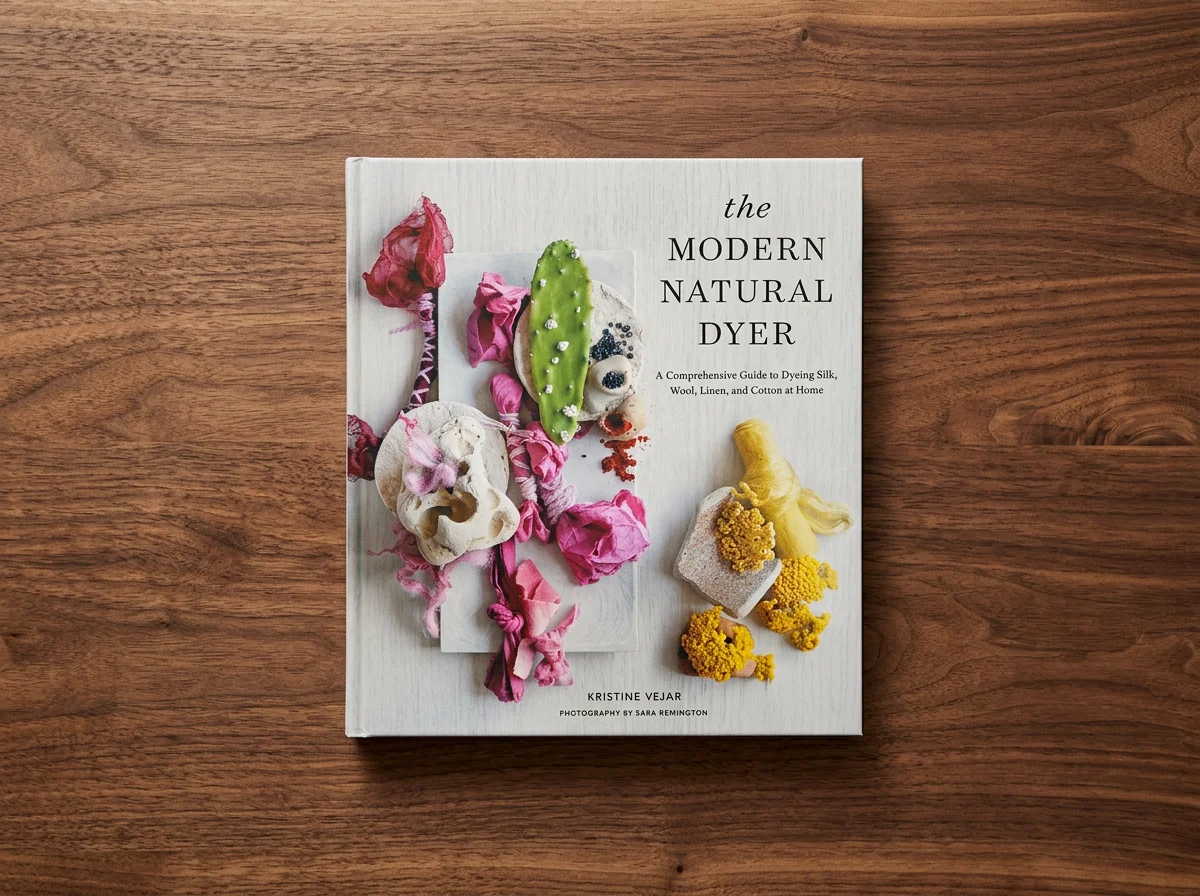
Color can become part of a textile’s story long before the first knot is tied. In my work, hand-dyeing brings another layer to the relationship between material, texture, and form—a way of creating color that feels integral to the finished piece.
The Modern Natural Dyer: A Comprehensive Guide to Dyeing Silk, Wool, Linen, and Cotton at Home by Kristine Vejar offers an inviting introduction to this process. Bringing together practical instruction, beautiful photography, and projects for the home and wardrobe, the book explores how natural materials can become a source of color for the things we make.
For those drawn to textiles, plants, or the quiet variations of a naturally dyed palette, it offers both a reference and an invitation to look more closely.
A Thoughtful Approach to Natural Dyeing
Vejar is the founder of A Verb for Keeping Warm, an Oakland-based shop and natural-dyeing studio offering yarn, fabric, tools, and classes. Her work brings together a love of making with a careful understanding of materials and the processes behind them.
In its profile of Vejar, Fibershed describes an approach that balances curiosity with methodical experimentation: exploring plant pigments while testing recipes for consistency, scale, and the differences between fibers. That balance is an important part of what makes natural dyeing so compelling. There is room for discovery, but also for observation, precision, and a deeper understanding of the material in your hands.
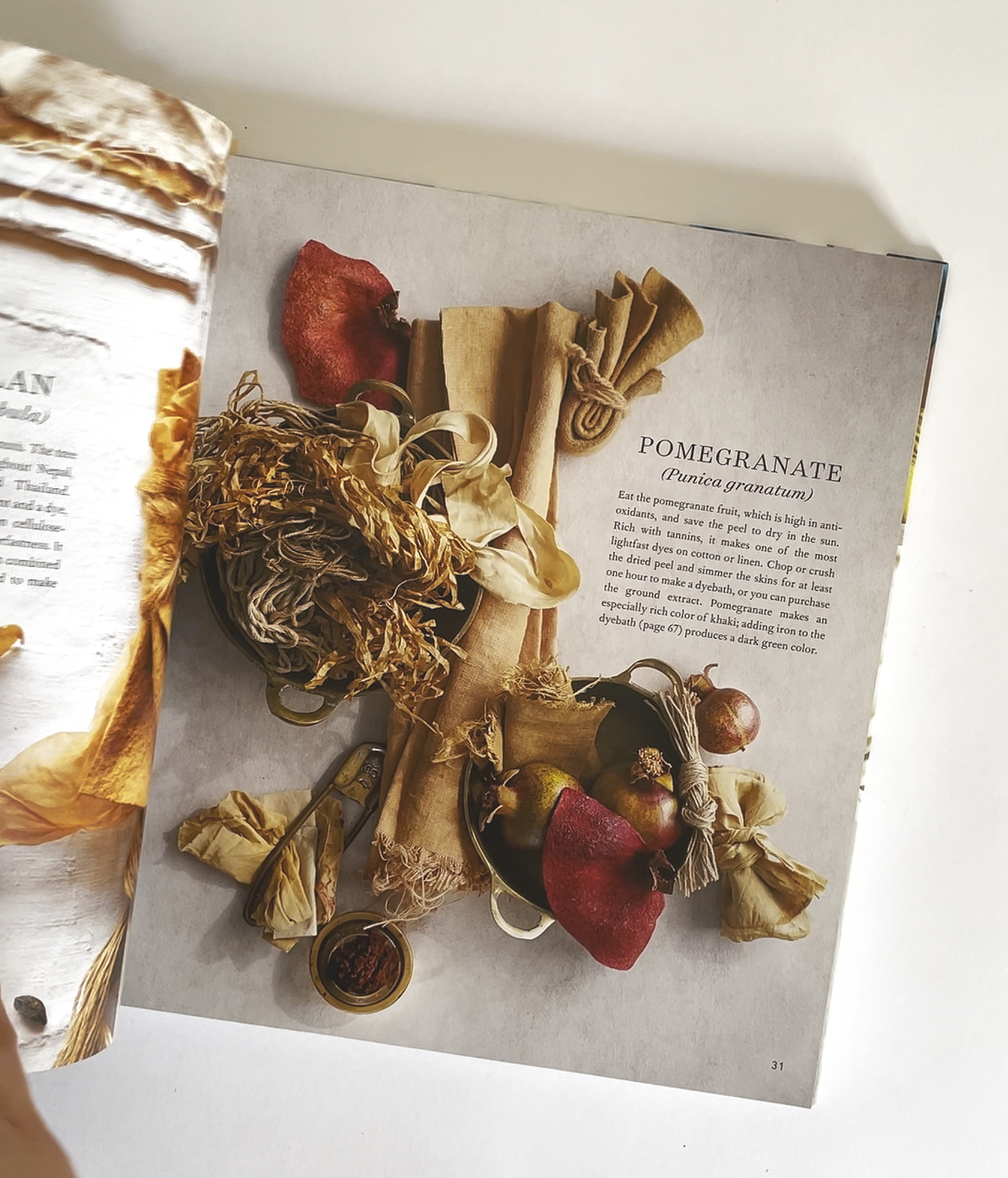
The Modern Natural Dyer translates that approach into an accessible guide. It covers dyeing with foraged and garden-grown materials, working with natural dye extracts, and exploring indigo and surface design. Its 20 projects offer ways to put those techniques into practice, whether through knitting, sewing, or dyeing an existing item.
Looking Closely at Fiber and Color
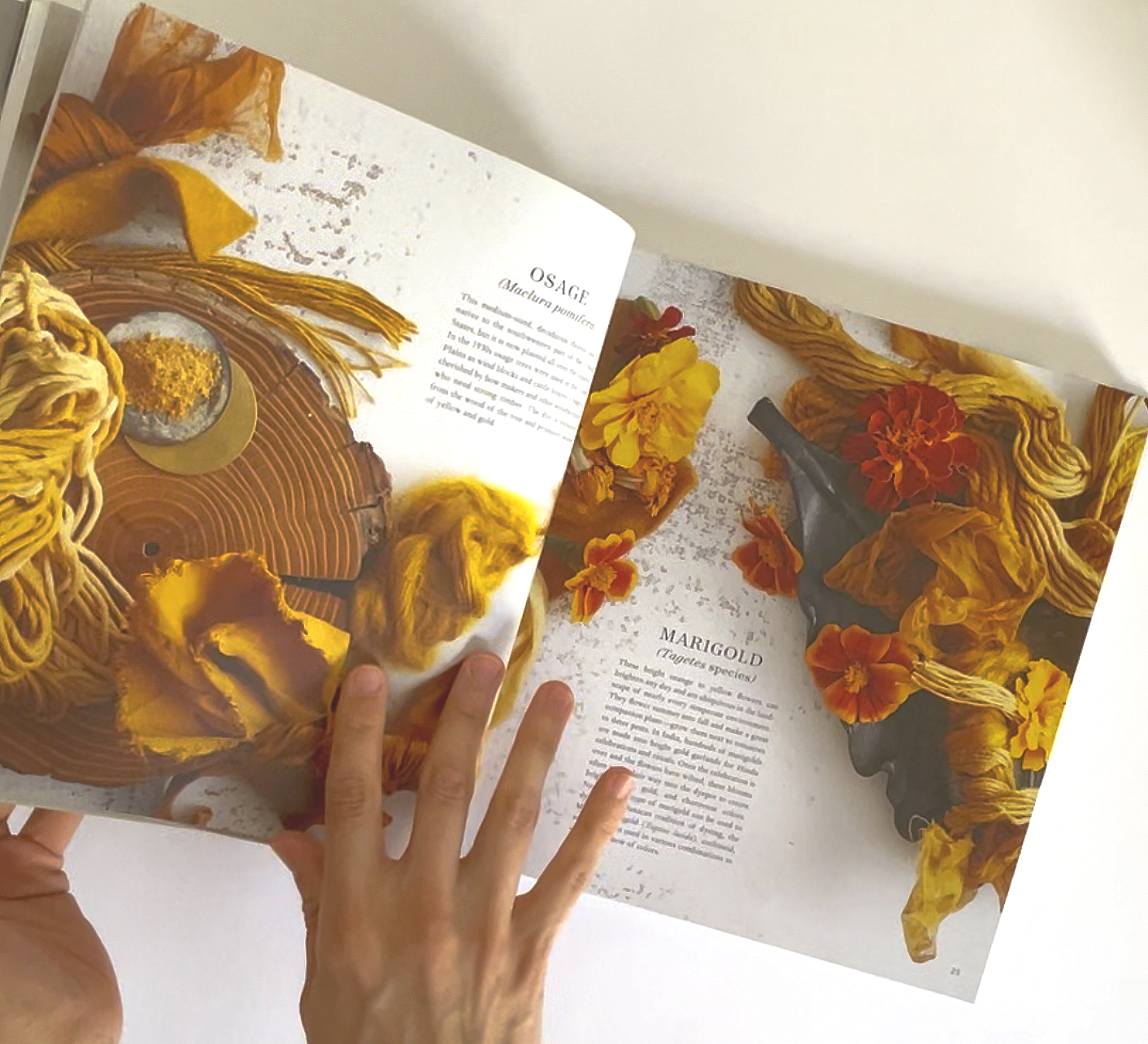
One of the most engaging aspects of the book is the way it makes color visible as a process rather than simply a finished result.
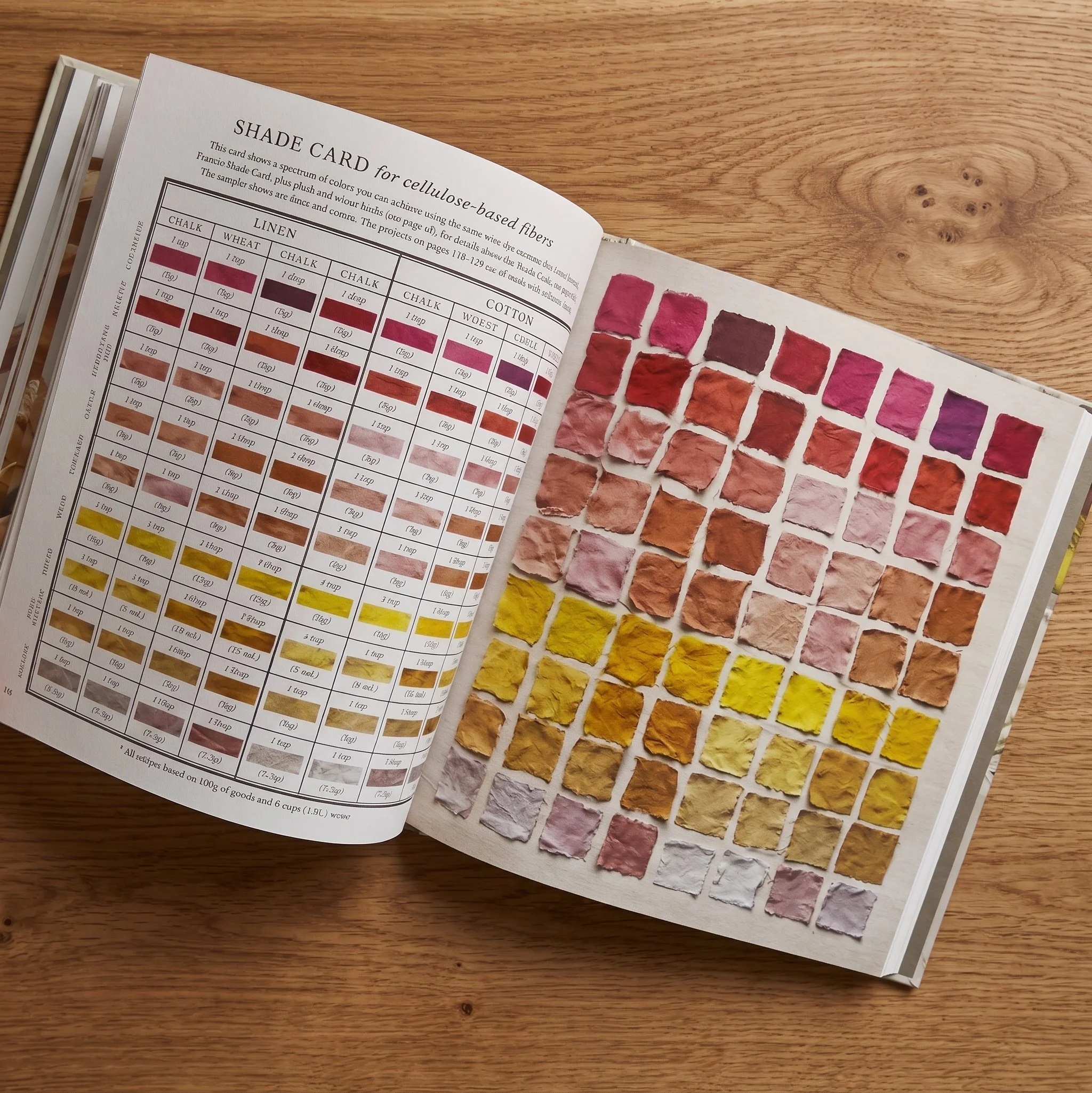
The photographed materials, dyed samples, and shade cards invite comparison. In the cellulose-fiber shade chart, linen and cotton samples sit alongside one another, showing a range of colors within an organized framework. Seen together, the swatches offer a useful reminder that a dye’s name alone does not tell the whole story of the finished shade. The fiber and the recipe matter, too.
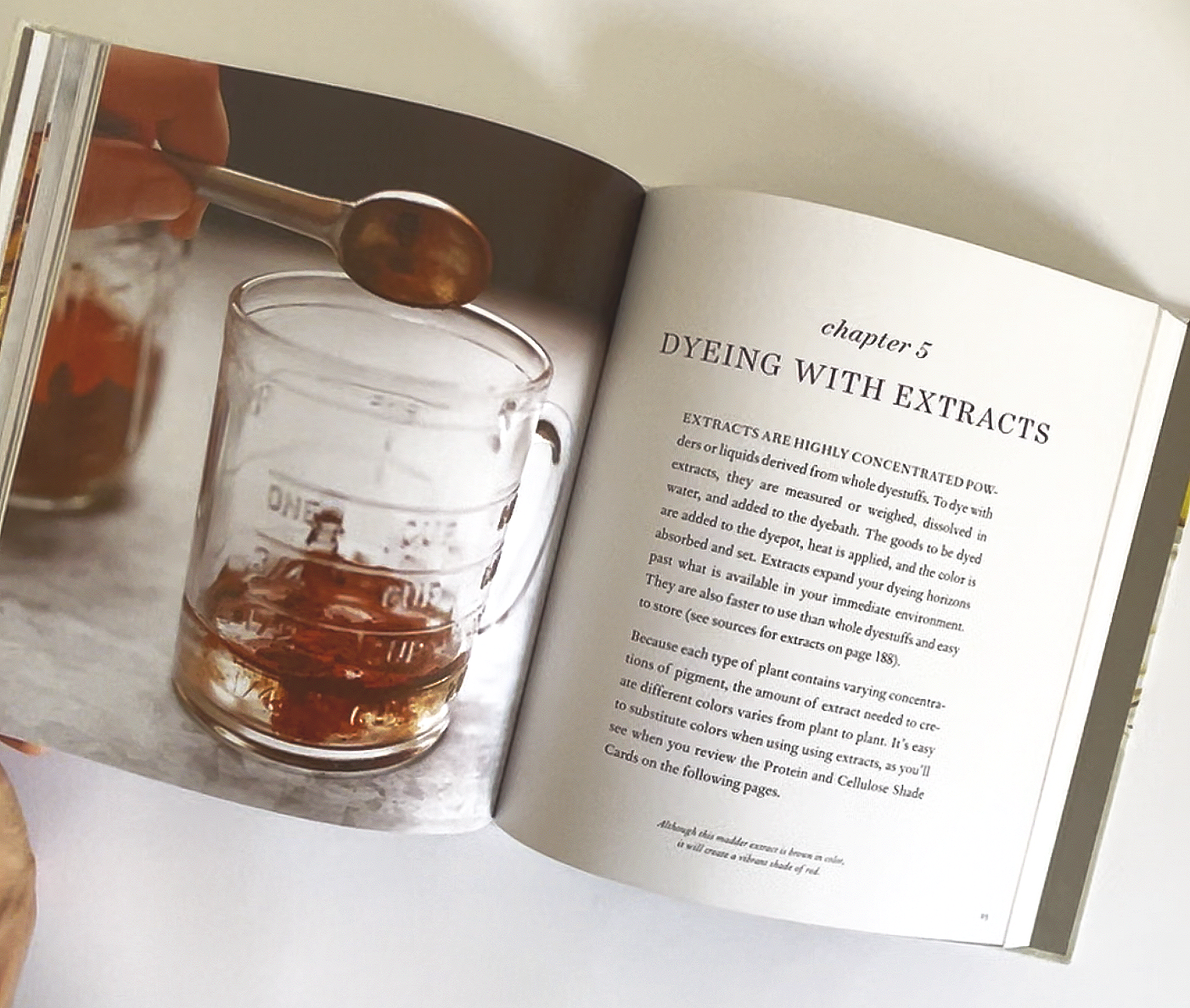
The book also distinguishes between working with whole dyestuffs and concentrated extracts. In the chapter on extracts, Vejar explains how these concentrated powders or liquids are dissolved and added to a dyebath, offering another way to work with natural color beyond the plants available nearby.
For a fiber artist, this combination of visual inspiration and practical information is especially valuable. A color sample can suggest a new direction, while a clear process gives that idea somewhere to begin.
Dyeing with Walnut: Earthy Color for Hand-Knotted Textiles
Walnut has a particular connection to my own studio practice. I use black walnut hulls to hand-dye organic cotton cord for selected wall hangings, creating variegated brown tones that become part of the finished textile’s texture.
The walnut spread in The Modern Natural Dyer places the dye material alongside dyed yarn and fabric, bringing the relationship between plant and textile into view. The samples form a restrained palette of soft browns and warm neutrals—a quieter kind of color study, but one with considerable depth.
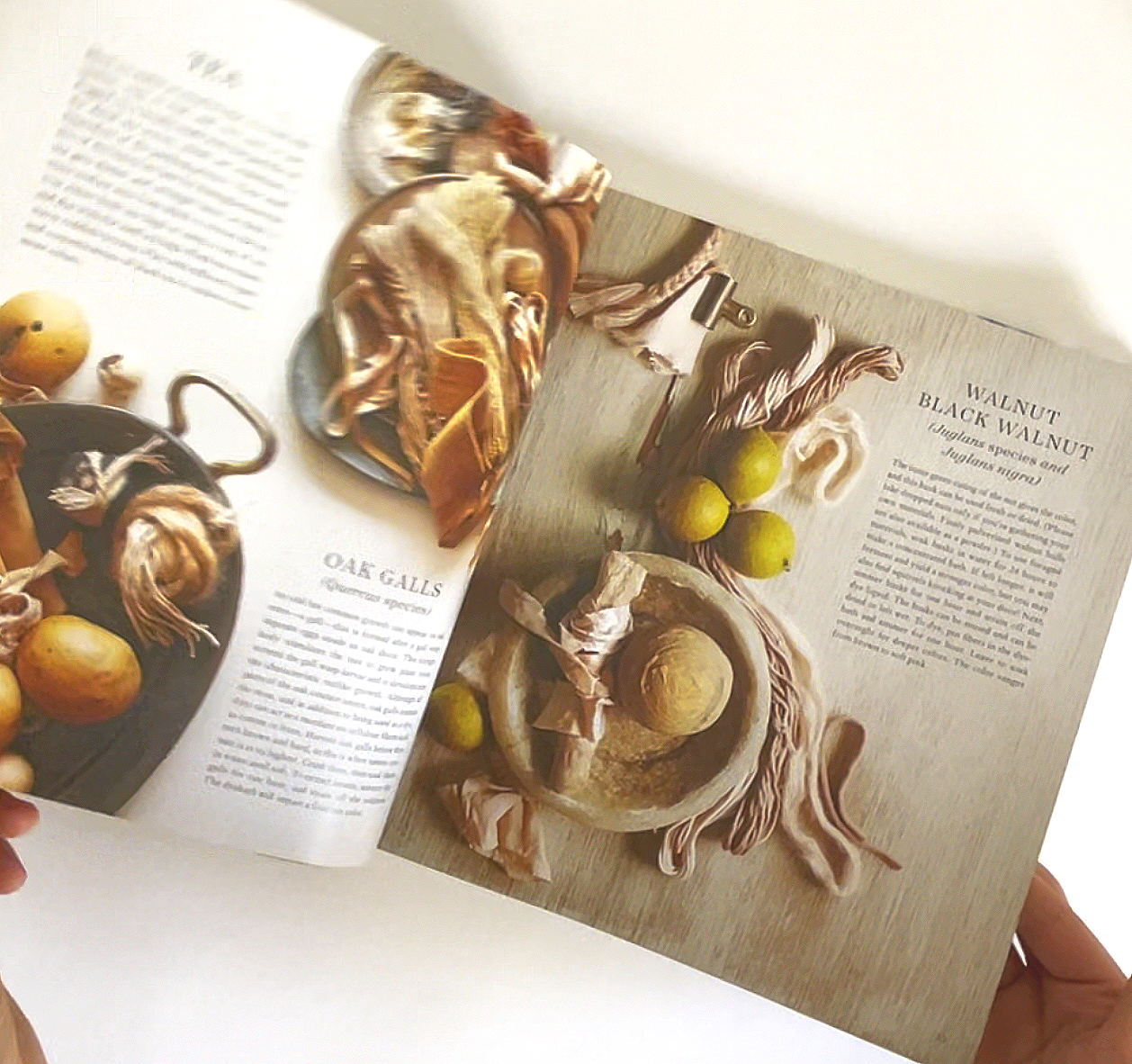
That depth is what draws me to walnut-dyed cord. Within a knotted surface, a neutral does not need to feel flat. Subtle shifts in tone can sit alongside the raised knots, open spaces, and loose fringe, giving the work another layer to explore.
Custom Color Macramé Wall Hanging
My Custom Color Macramé Wall Hanging pairs a spacious geometric motif with soft, lofty organic cotton cord. Hand-dyed with black walnut hulls, the cord has variegated earthy tones that soften the design’s clean lines. Elongated fringe adds movement and a more relaxed finish.
Here, the relationship between structure and color is central: the geometry provides order, while the dyed cord brings tonal variation to the surface.
Brown Melange Macramé
In Brown Melange Macramé, contrasting natural tones and a plush, hand-knotted surface create a more densely textured composition. Black walnut hull dye gives the organic cotton cord its variegated neutral browns, bringing warmth to the work without relying on a bright palette.
Both pieces are designed and handmade in my Brooklyn studio. They bring botanical color into a larger textile form, where the dyed cord becomes part of the artwork’s rhythm, scale, and presence in a room.
A Book That Encourages Closer Attention
What makes The Modern Natural Dyer relevant beyond its individual projects is its attention to the relationship between source material, fiber, and finished color. The plant photographs, shade cards, and process instructions encourage a way of looking that is both practical and curious.
For me, that is also part of the appeal of hand-dyed fiber art. Color is not simply added at the end. It becomes part of the material from which the work takes shape.
To explore Vejar’s work, visit A Verb for Keeping Warm, where you can find the book alongside natural-dyeing supplies and learning resources. You can also find The Modern Natural Dyer on Amazon.