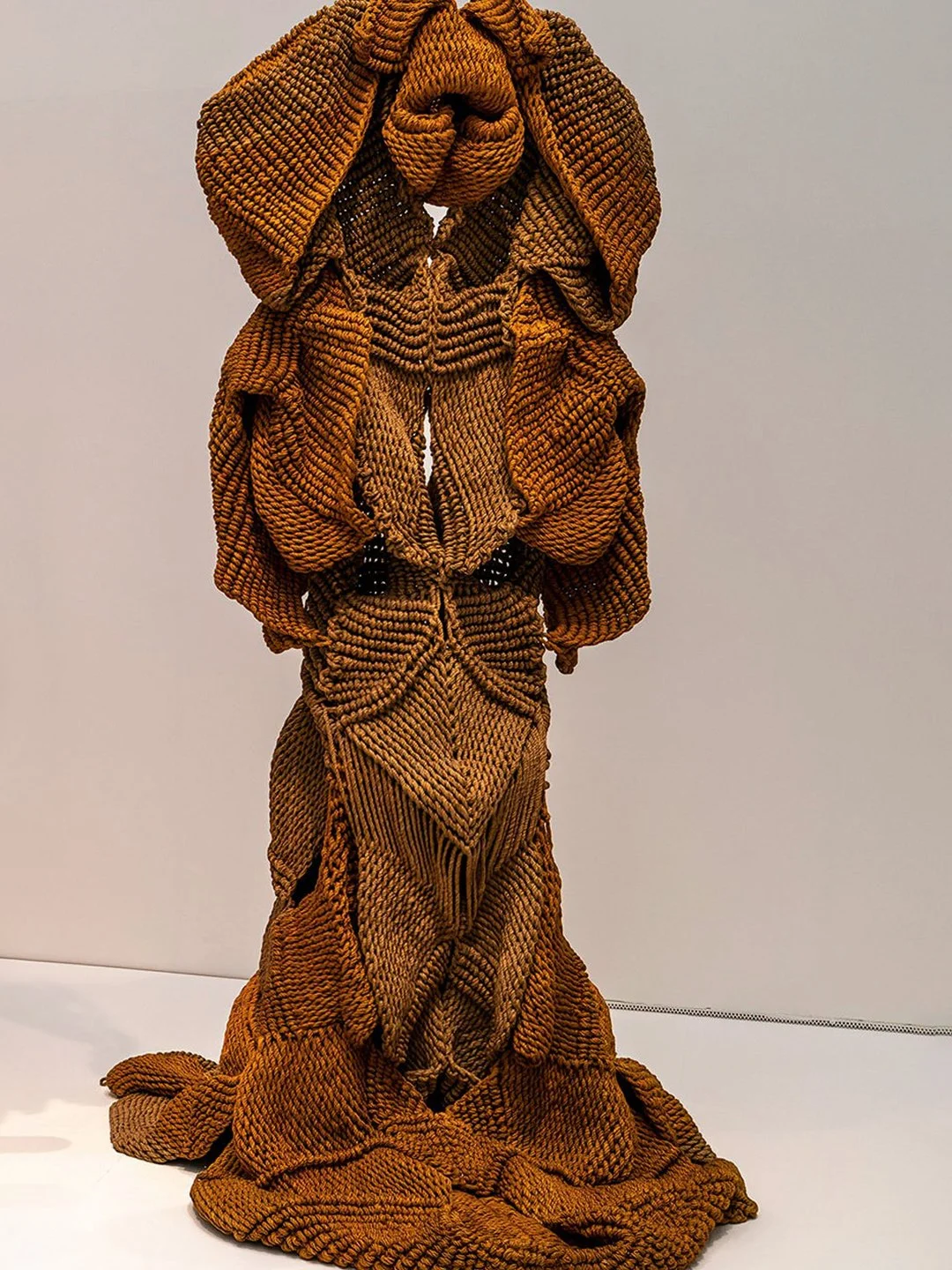
MRINALINI MUKHERJEE + FIBER AND FORM
Mrinalini Mukherjee’s work is a profound inspiration for my own fiber-art practice: it insists that rope, knotting, and hand-built form can hold real sculptural presence.
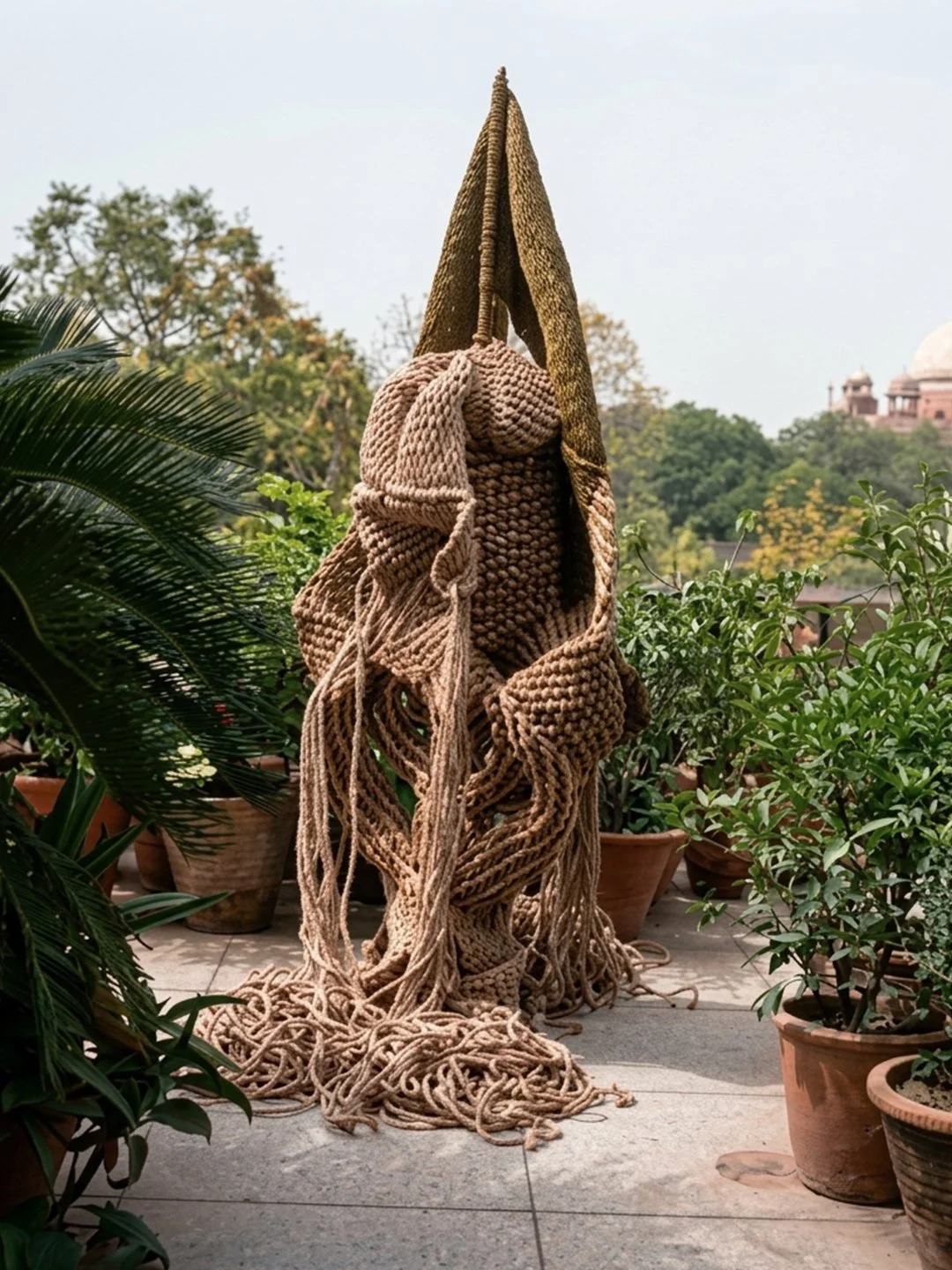
I’m sharing the extraordinary work of Mrinalini Mukherjee (1949–2015), an Indian artist whose sculptures continue to expand my sense of what fiber can be.
Mukherjee trained in painting and mural design in Baroda before finding her material language in the early 1970s: dyed hemp, jute, and natural fiber, densely knotted and built into monumental forms. Over a career spanning roughly four decades, she made work that moved beautifully between abstraction, figuration, nature, mythology, and the body—later extending her sculptural vocabulary into ceramic and bronze.
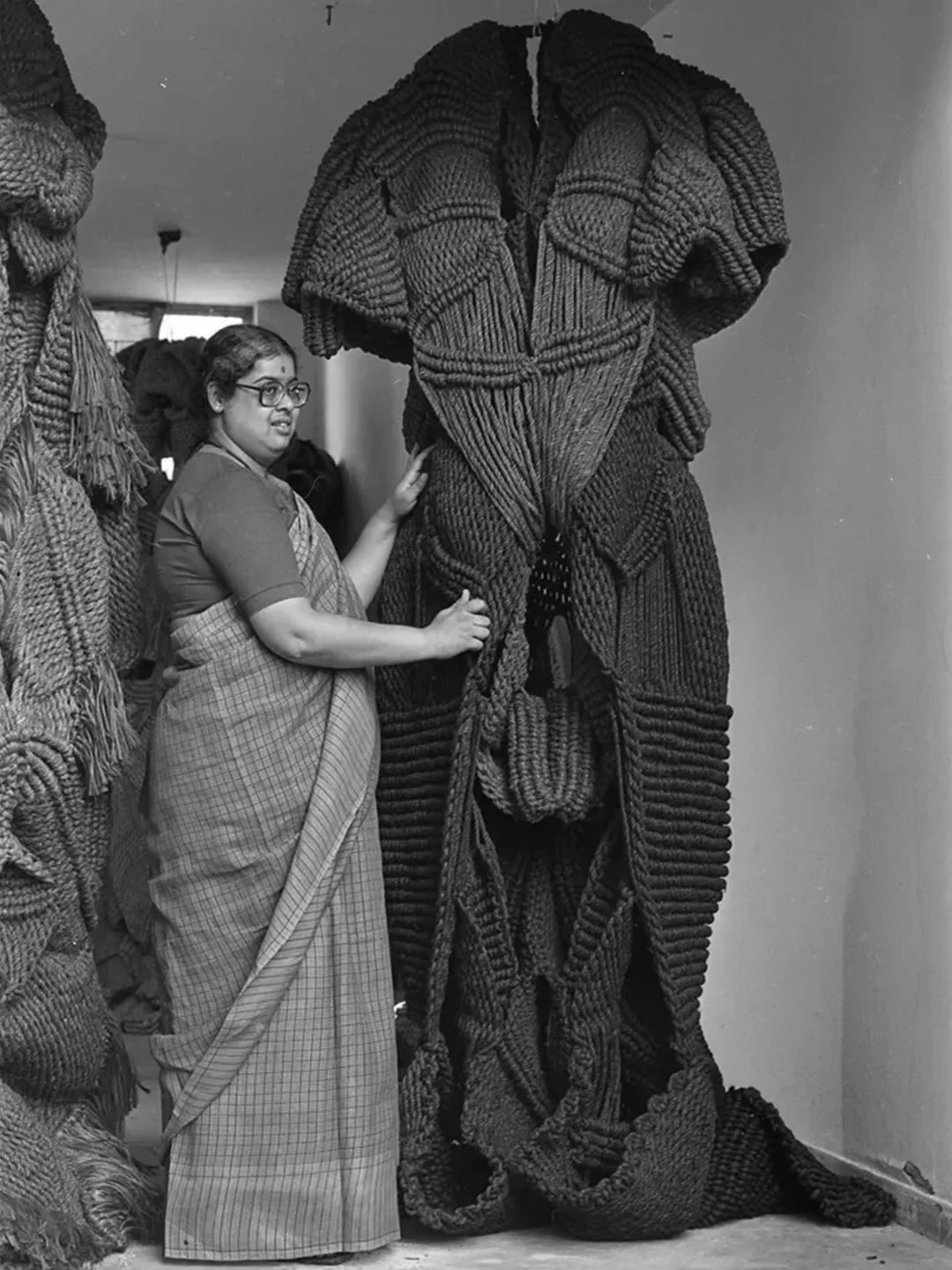
What moves me most is the physical authority of her work. Her forms can feel botanical, bodily, ceremonial, architectural, and otherworldly all at once. They do not apologize for being fiber; they claim space with the scale, weight, complexity, and presence we often reserve for more conventionally “sculptural” materials.
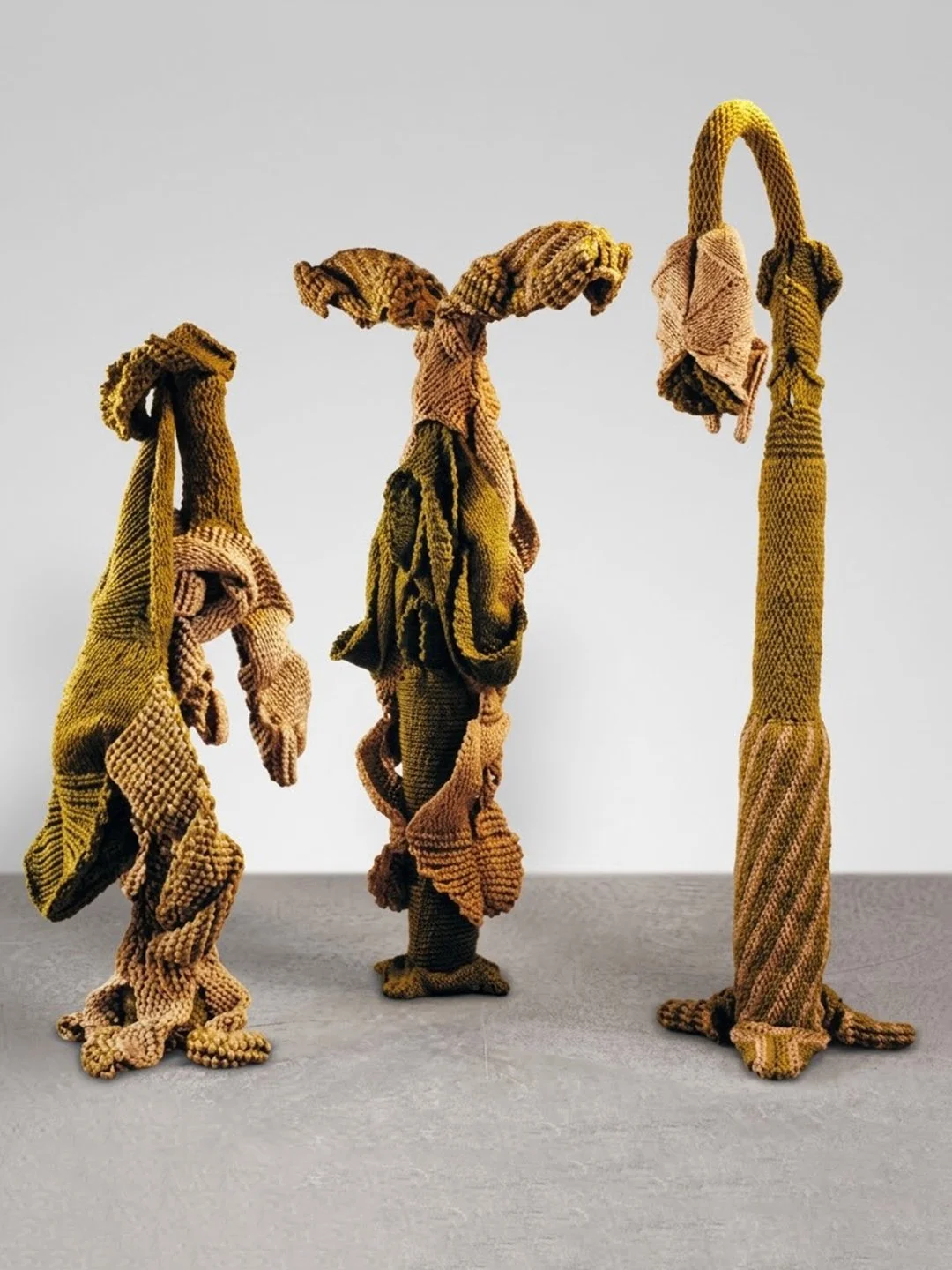
As a fiber artist, I return to her work for permission to trust material, repetition, intuition, and labor. Mukherjee reminds me that knots can become skin, ropes can become volume, and soft materials can be monumental.
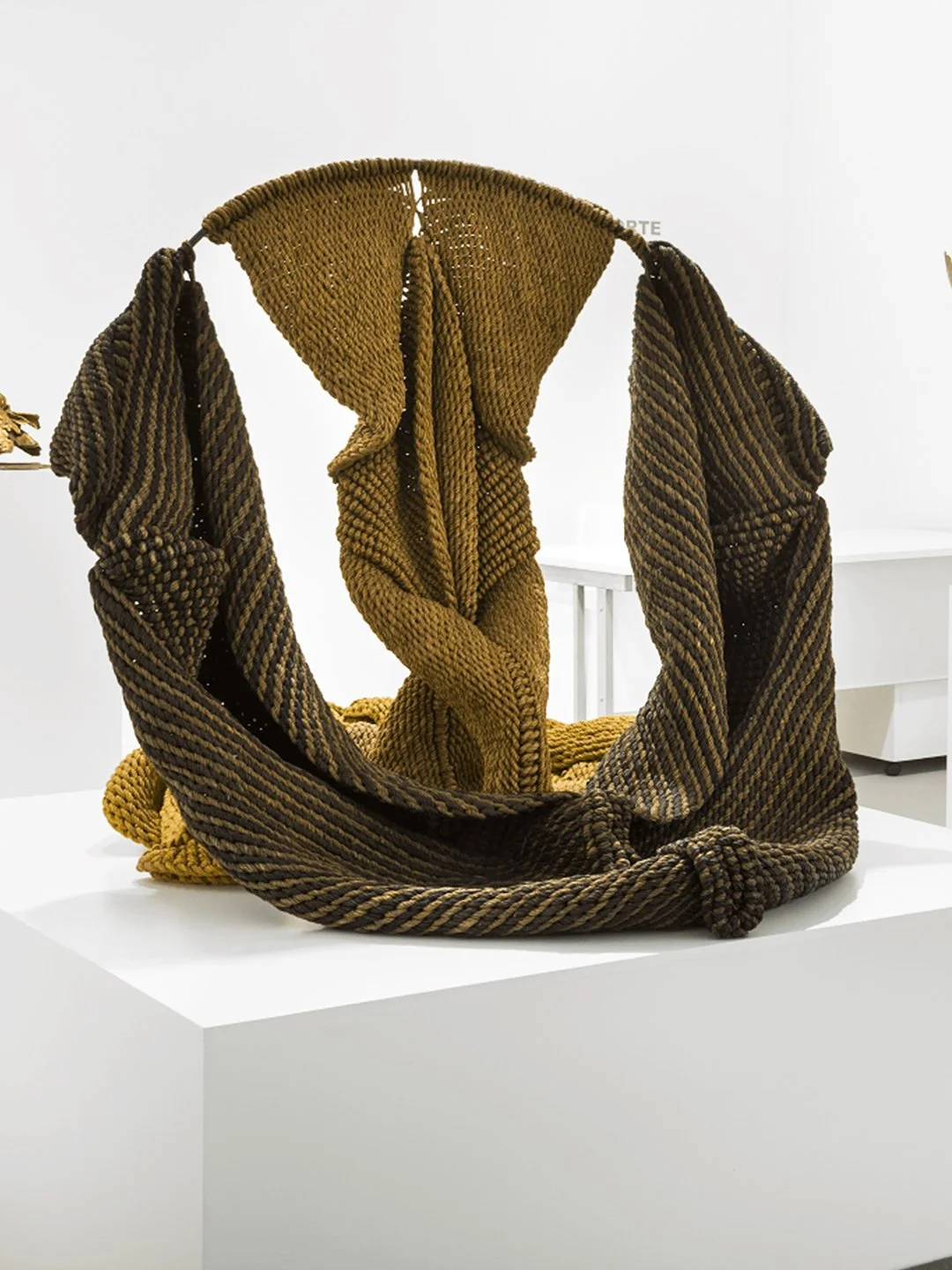
Her work continues to make me want to build bigger, take more risks, and let fiber become fully sculptural.