

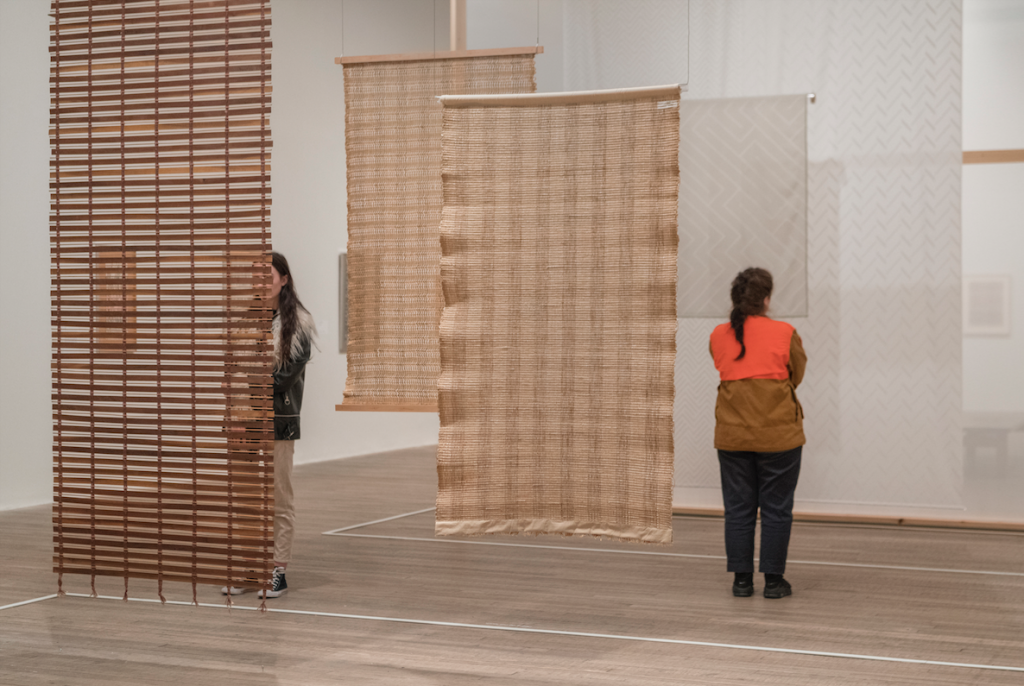
A textile can hang on a wall, divide a room, or cover a chair. In Anni Albers’s working life, these were not competing ambitions. She was a weaver, a teacher, and a textile designer whose practice accommodated both individual artworks and fabrics intended for production. The useful object was not something she had to leave behind to become an artist. It was a place to begin.
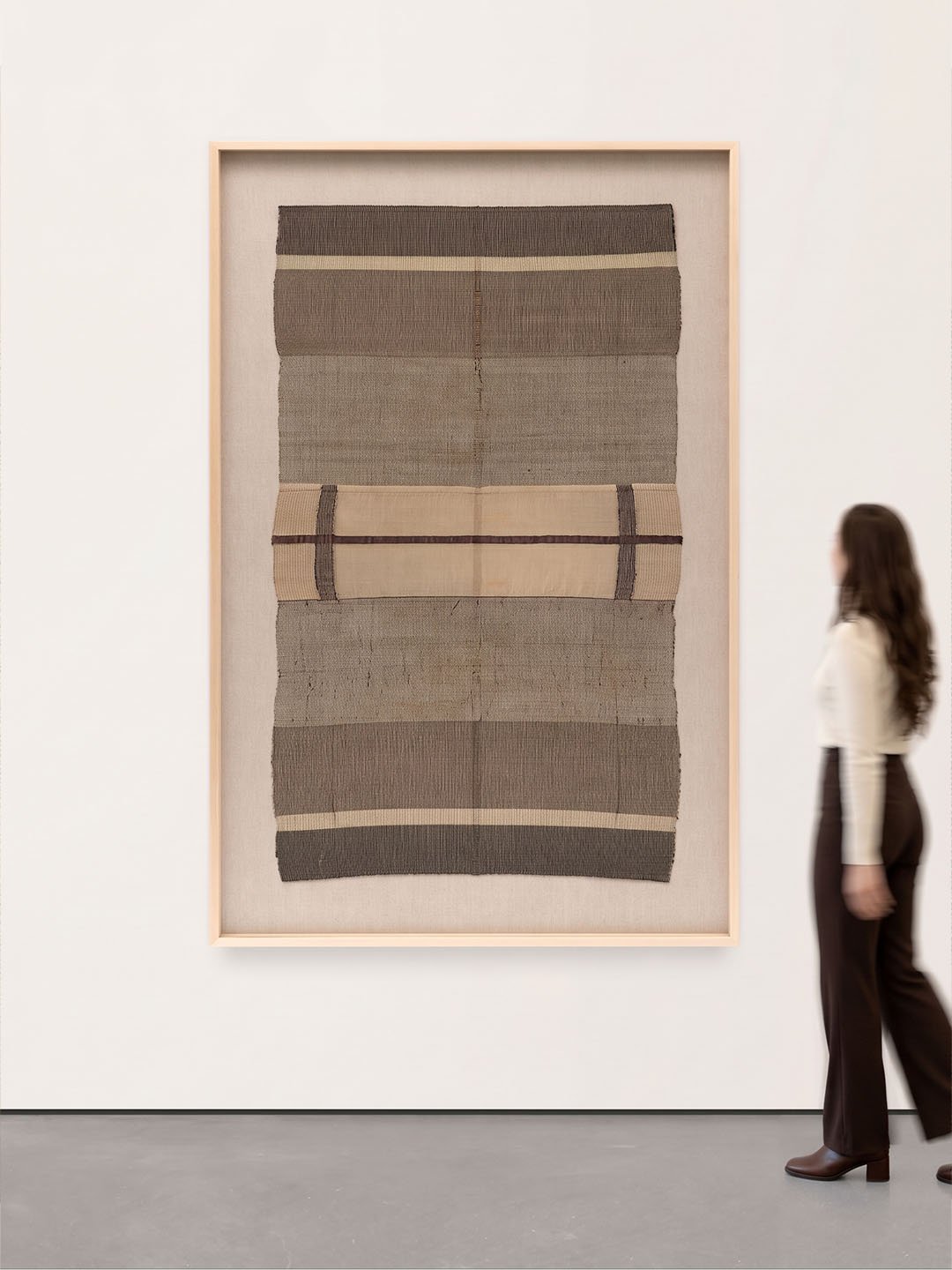
For someone who makes fiber art for interiors, this is an especially compelling part of her story. There is a particular kind of invention that happens when material meets a practical question: how much light should pass through a screen? How should a hanging occupy a room? What happens when a surface needs to be beautiful, but also do something?
A working life in textiles
Albers entered the Bauhaus in 1922 and eventually directed its weaving workshop. After moving to the United States in 1933, she taught weaving at Black Mountain College in North Carolina. There, she developed wall coverings, drapery, and upholstery materials alongside independent woven artworks—two strands of a practice that would continue well beyond her teaching years.
She was a hands-on maker, but her work was not confined to what she could produce at her own loom. In 1951, Florence Knoll invited her to collaborate with Knoll’s textiles department, beginning a professional relationship that lasted three decades. Designing for manufacture offered another way for her experiments to enter everyday life: not as a single treasured object, but as fabric used across many interiors.
That distinction matters. A one-of-a-kind weaving and a textile designed for production ask different things of their maker. Albers worked across both, taking the possibilities of each seriously. Her career offers a useful alternative to the idea that an artist’s practical work must be separate from the “real” work.
The structure becomes the image
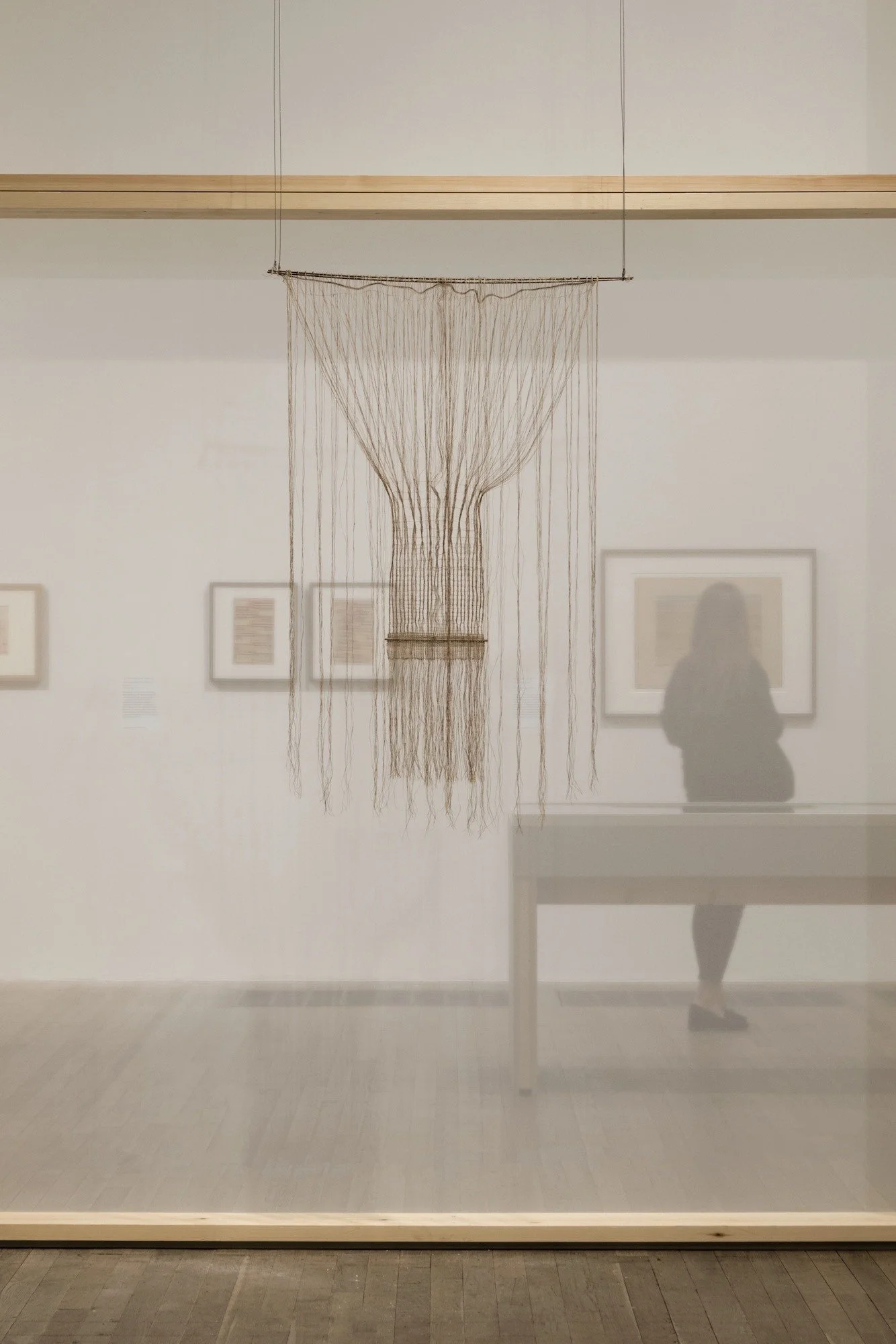
Albers’s contribution to modern weaving was not simply a matter of introducing geometric patterns. She explored what the construction of a textile could express in its own right. Threads could gather, separate, interrupt a grid, or let light through. Texture was not a finishing touch; it helped create the composition.
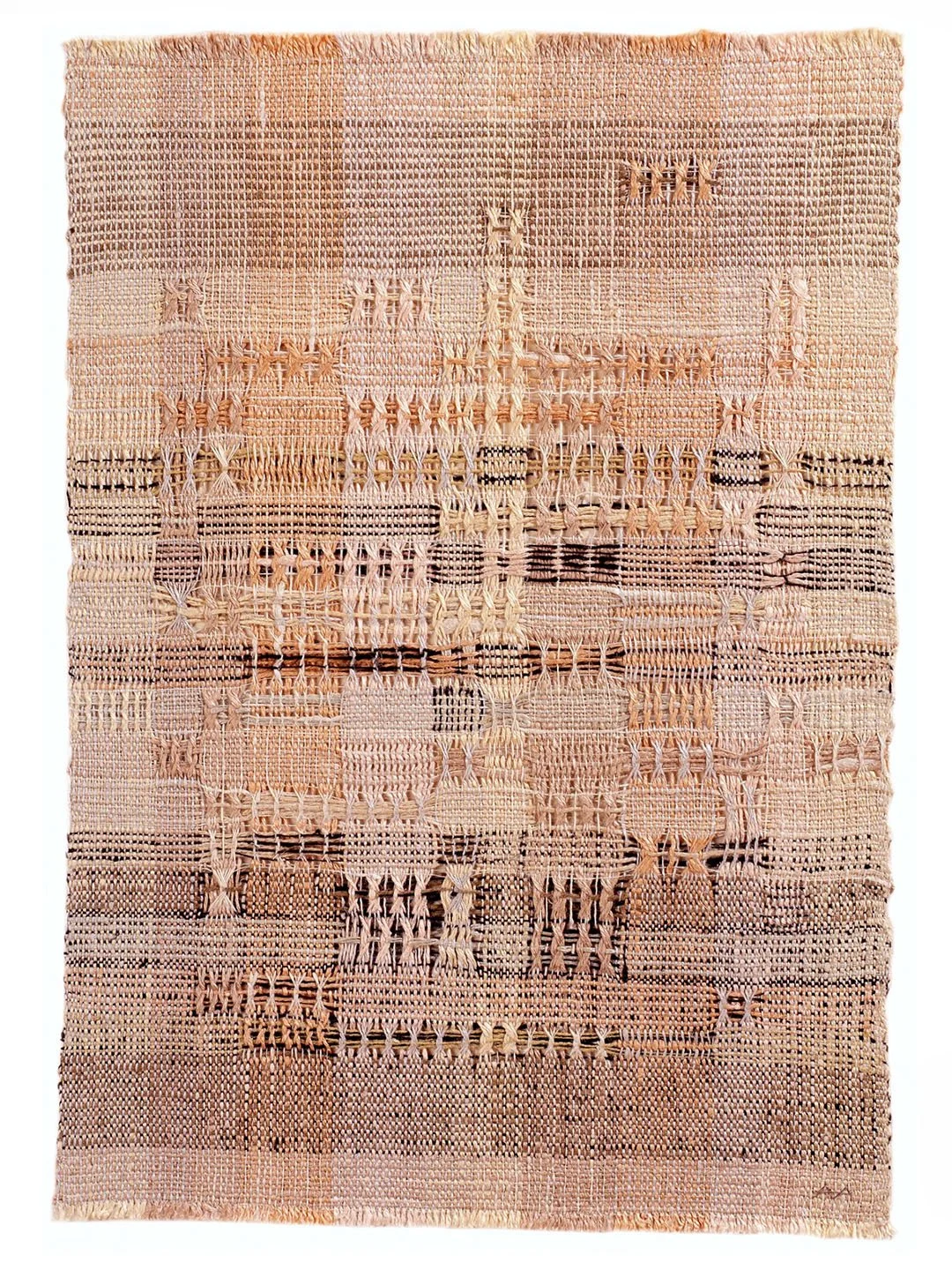
In Development in Rose I (1952), included among the images here, the woven grid opens and tightens across the surface. Small changes in thread, spacing, and density become events. The piece rewards close attention without requiring a dramatic palette: its interest lies as much in how it is built as in the colors it contains.
This was abstraction made through weaving rather than an image merely transferred onto cloth. Albers drew deeply on ancient American textile traditions, recognizing in them sophisticated approaches to structure and design. Her modernism was not a rejection of weaving’s history, but a sustained conversation with it.
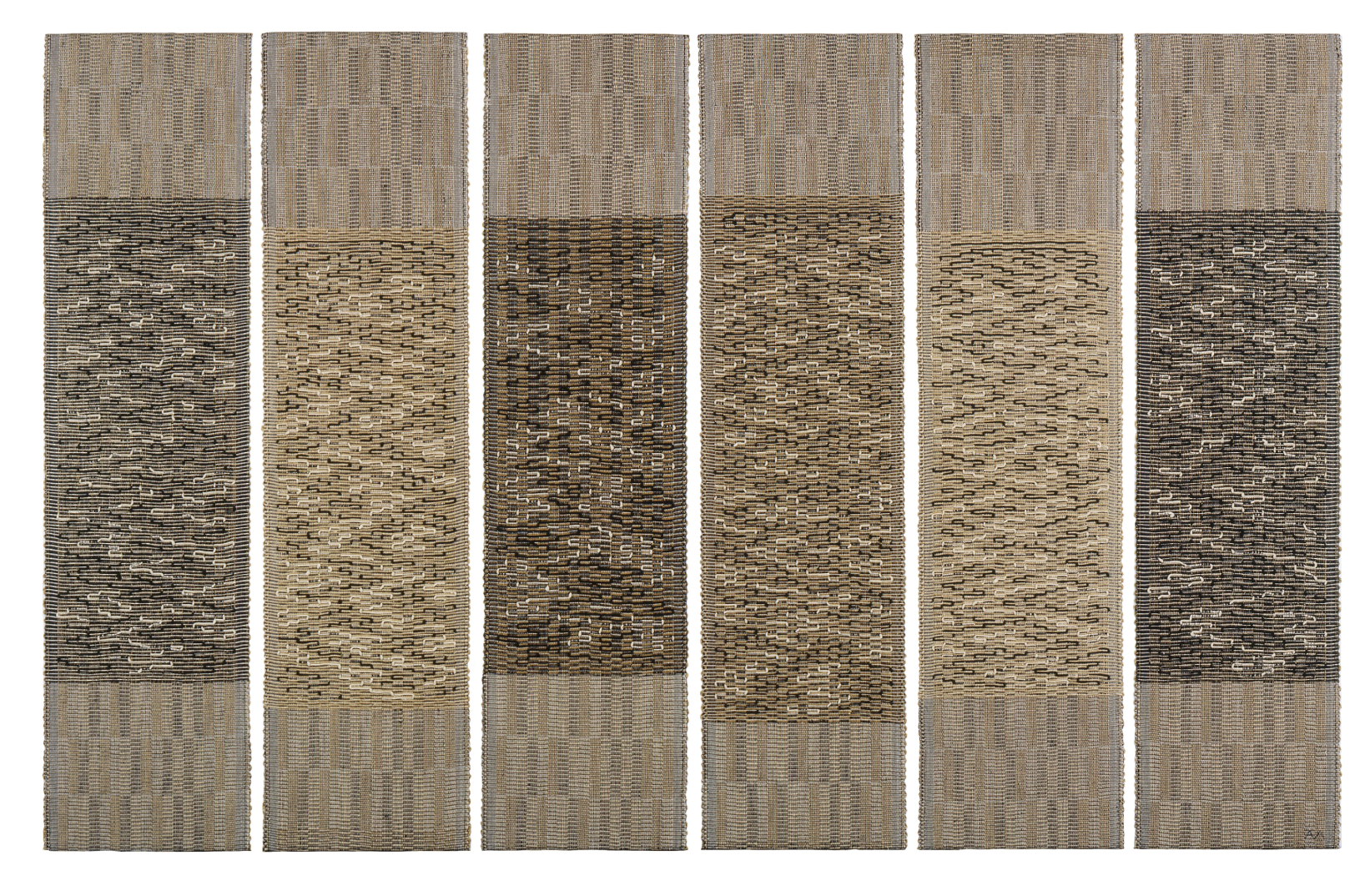
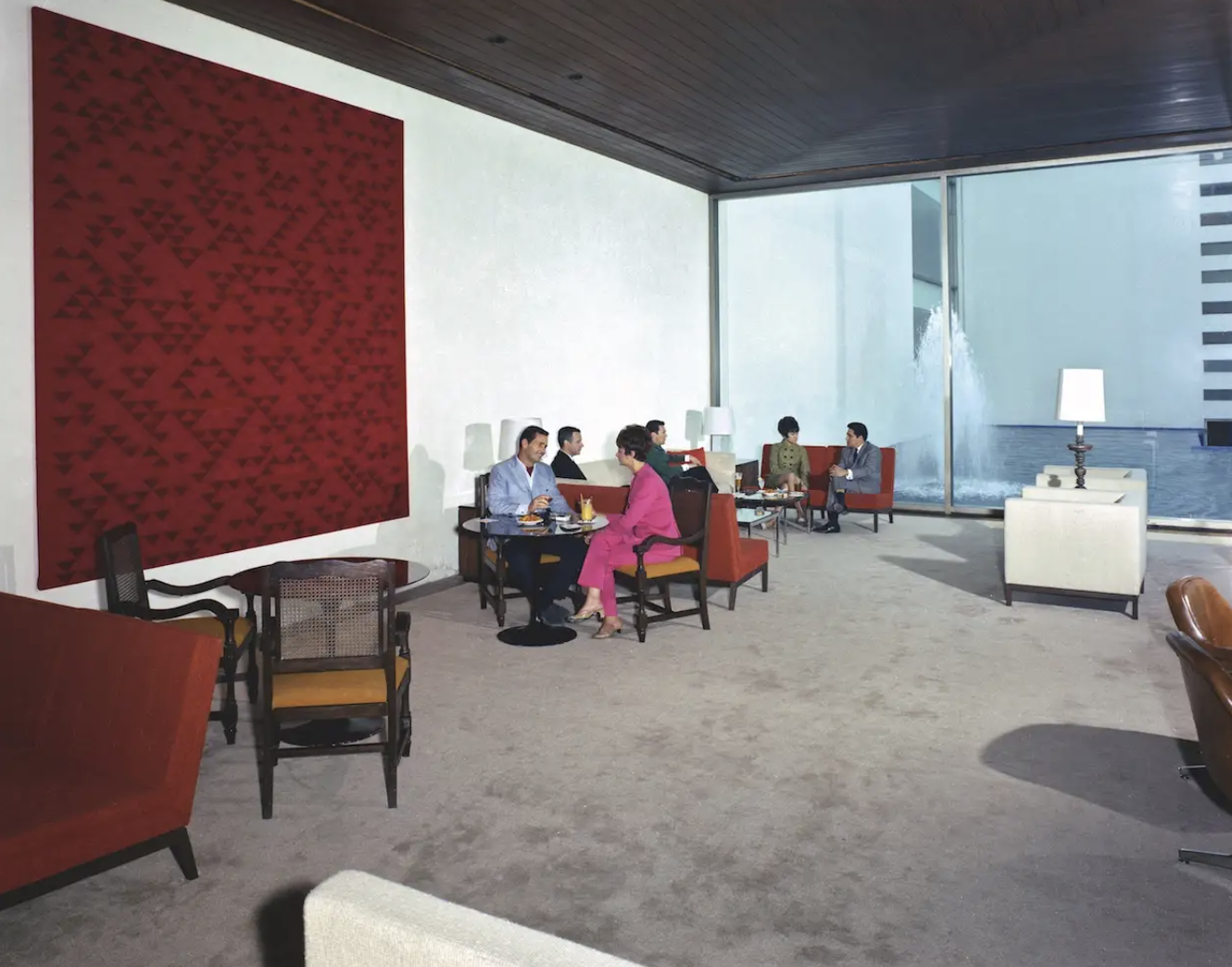
The later Six Prayers (1966–67), also pictured here, suggests another possibility: six tall woven panels whose intricate surfaces evoke a kind of writing. Seen together, they have an architectural presence; seen closely, they return the eye to individual threads.
Natural fibers, quiet color, and material character
Working with natural fibers makes you attentive to differences that a photograph can easily flatten: the firmness of one thread, the softness of another, the way a twist catches light. In my own knotted work, those qualities help determine the form rather than simply furnishing its surface.
Albers gave this kind of attention a central place in her thinking. In On Weaving, she placed the character of the yarn and the texture of the cloth ahead of color. It is a useful reversal of the way we often encounter textiles—choosing a shade first and noticing the construction afterward.
The muted works gathered here make that approach particularly visible. Creams, browns, pale pinks, and darker threads give structure room to register. A restrained palette is not necessarily a reduction in complexity; it can make small differences more legible.
There is an important qualification, though: Albers was not exclusively a natural-fiber artist. She experimented with manufactured materials as well. Her curiosity was directed toward what a material could do, rather than whether it belonged to a particular category. That openness is part of what makes her work so useful to revisit.
When a textile changes a room
One of Albers’s most revealing early projects was a sound-absorbing, light-reflecting wall covering for the auditorium of the ADGB Trade Union School in Bernau, Germany. Developed for her Bauhaus diploma, it combined cotton, chenille, and cellophane to address the room’s acoustic and lighting needs. Here, the practical brief was not added to the design afterward. It helped generate the textile.
Her free-hanging room dividers approached space differently. Rather than forming a solid boundary, they allowed separation and transparency to coexist. A textile could organize a room while preserving the passage of light and a sense of connection.
These questions remain relevant to contemporary fiber art for interiors. My own work includes natural-fiber screens, room dividers, and large-scale wall hangings, where texture and structure are considered in relation to the surrounding space.
Sound is part of that relationship, too. In my textile pieces intended to help soften a room’s acoustics, the aim is to bring visual warmth and a sound-conscious approach into the same object. Their effect depends on the construction, scale, placement, and room itself; the connection to Albers is an approach to design, not a claim of equivalent acoustic performance.
What interests me is the refusal to treat usefulness as the opposite of artistic ambition. A textile can change how a room looks, how it is divided, and potentially how it sounds. Those are not lesser concerns than its composition. They are part of living with it.
A place on the bookshelf
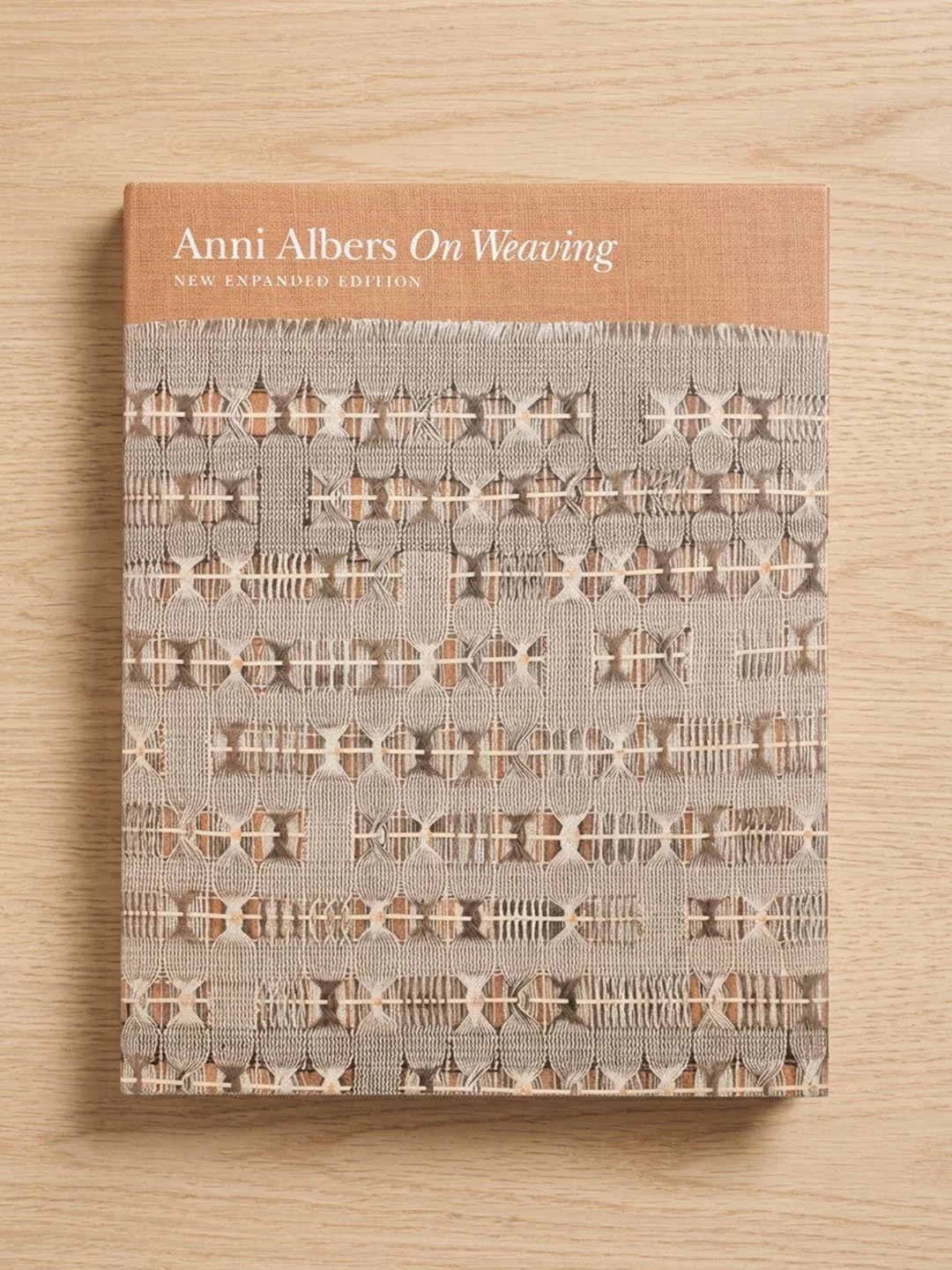
Albers’s On Weaving, first published in 1965, brings these questions onto the page. It considers weaving through material, construction, history, and design—an account of the medium that reaches beyond instructions for making a particular object. The expanded edition adds full-color illustrations, giving the visual examples a renewed presence.
It is an inspiring favourite in my textile art library, partly because it encourages a kind of attention that remains useful after the book is closed. Look at the thread. Look at the space between threads. Consider what the material makes possible before deciding what it should become.