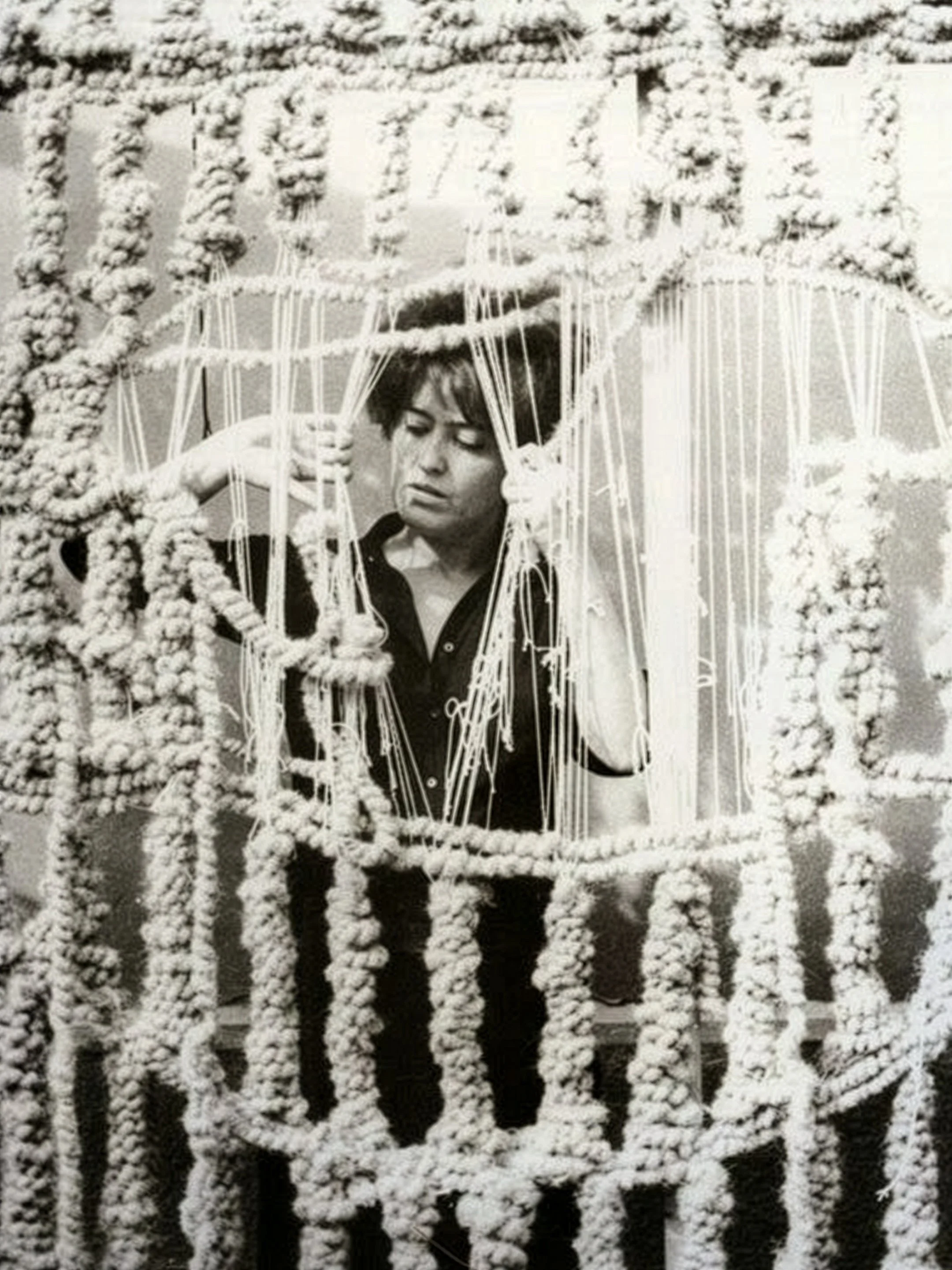
JAGODA BUIC + LARGE-SCALE WOVEN SCULPTURE INSTALLATIONS
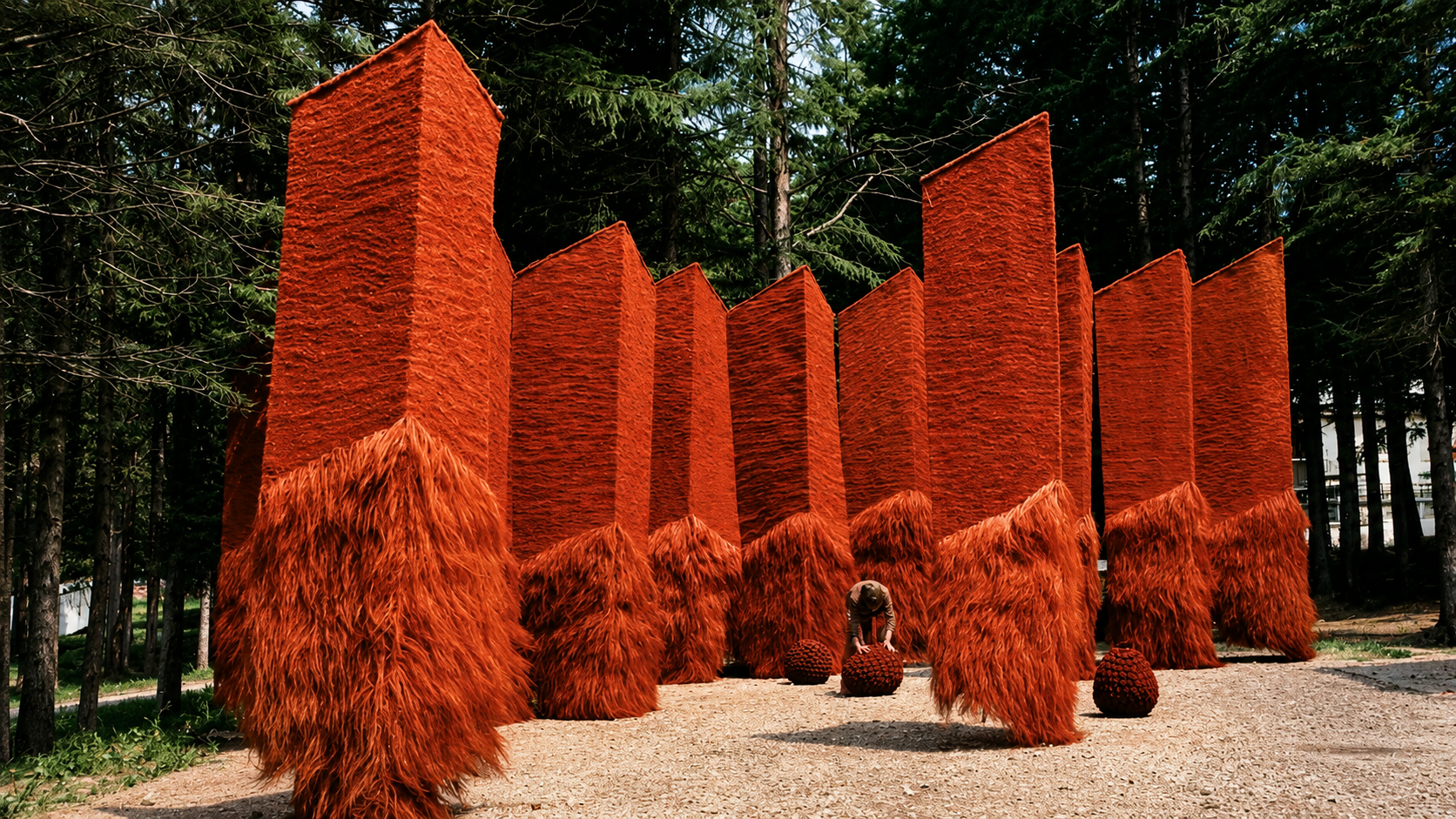
The work of Jagoda Buic exists somewhere between architecture, landscape, and ritual object. Monumental woven forms that feel ancient and futuristic at the same time. She didn’t just make textile art—she expanded its scale, its authority, and its place in contemporary art.
What I keep coming back to is her refusal to treat fiber as “soft” or secondary. These works are heavy, structural, commanding. They occupy space the way sculpture does, the way bodies do. There’s nothing decorative about them—they confront you.
She worked with raw materials—wool, sisal, rope—and elevated them without stripping away their physicality. You still feel the tension, the weight, the labor.
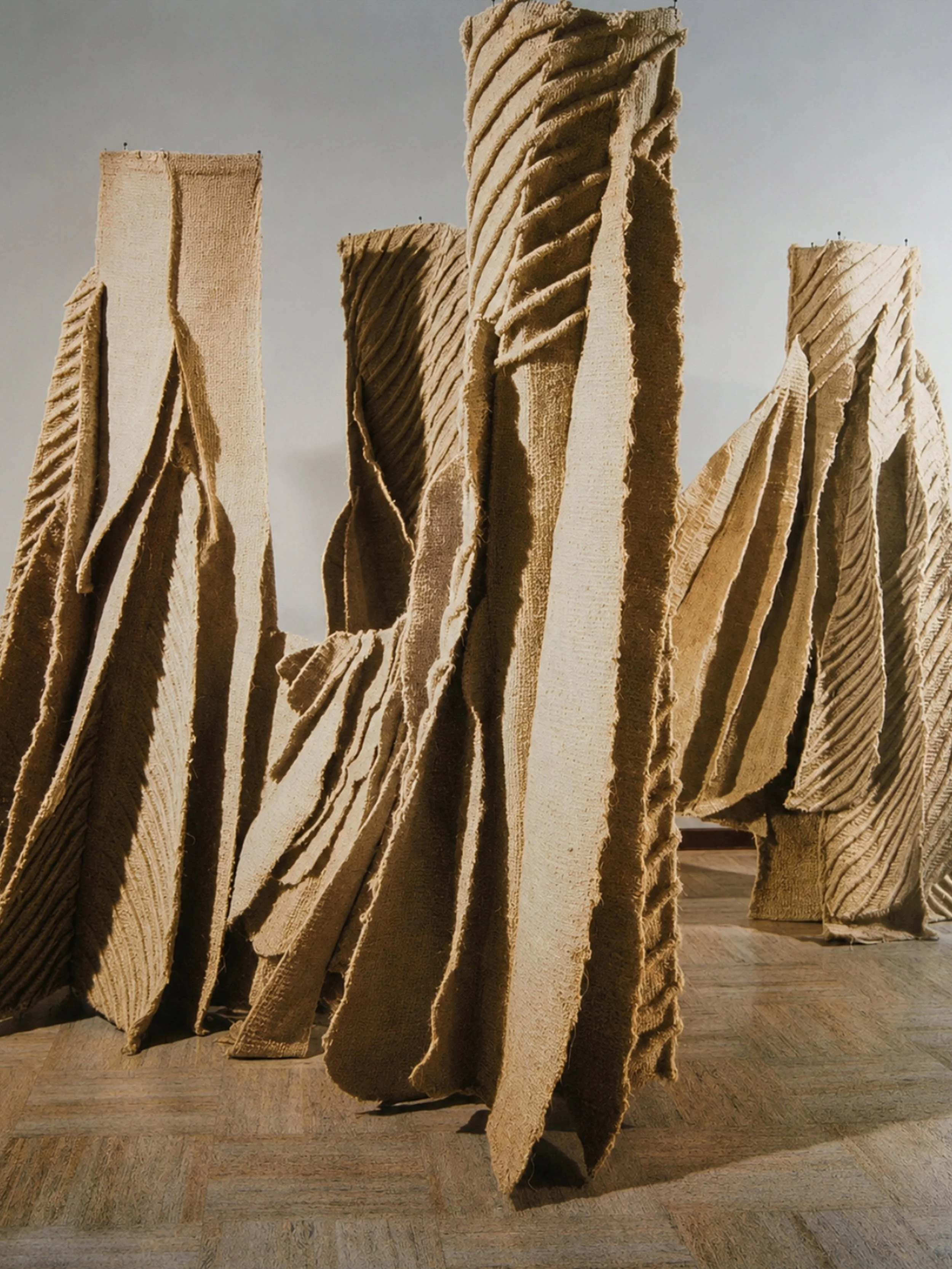
Although Jagoda Buic’s career has been remarkably interdisciplinary and has spanned several decades, she is best known for her monumental woven sculptures and installations. Originally trained as a theatre designer, she rose to international prominence in the mid-1960s when her ambitious textile works were exhibited at the Lausanne International Tapestry Biennial. There, her three-dimensional approach to weaving challenged conventional notions of tapestry and was considered strikingly innovative for its time. Buic became one of the leading figures of the fibre art movement of the 1960s and 1970s, creating works that often draw upon architectural forms and reflect the convergence of theatrical and textile traditions.